


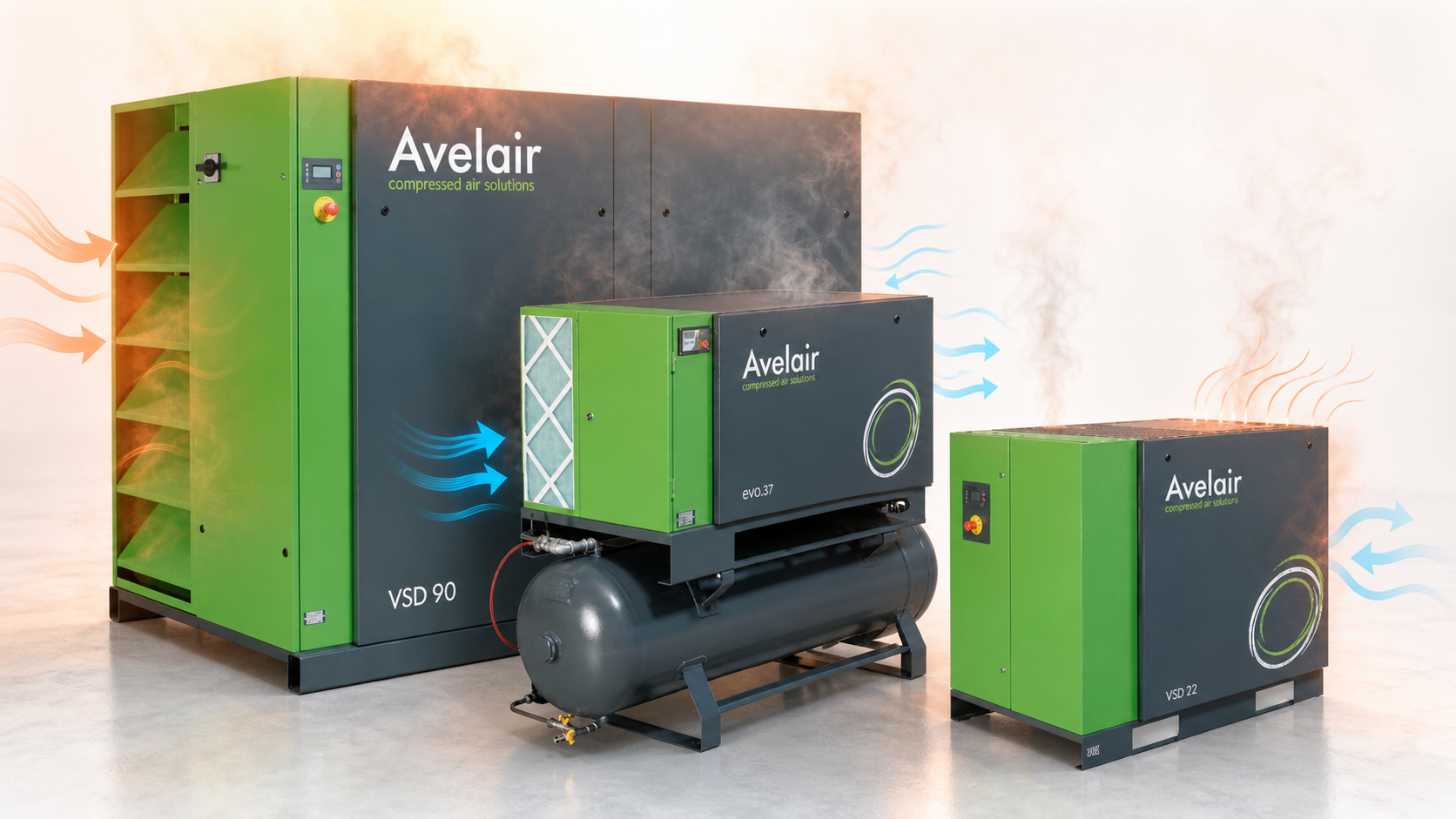
Hot weather can put extra strain on your compressor, especially when systems are running for longer periods or operating in less than ideal conditions. Higher temperatures can have a negative effect on efficiency as well as increasing wear on key components and raising the risk of breakdowns. Here’s a few simple checks you can do now which can help save you time, money and disruption later on.
1. Keep the compressor room well ventilated
One of the most important things you can do in hot weather is make sure your compressor has enough clean, cool airflow around it. If the room is too warm or if vents and airflow paths are blocked, the compressor will have to work harder to keep itself within a safe operating range. That can lead to reduced efficiency, overheating and in some cases an unexpected shutdown.
If your compressor is installed in a cramped or poorly ventilated space, it may be worth reviewing the layout before temperatures peak. Small improvements to airflow can make a noticeable difference to the operating temperature of your system.
2. Clean the coolers and filters
During warmer months, dust, dirt and debris can build up more quickly and reduce the compressor’s ability to dissipate heat. Coolers that are clogged up or filters that are overdue for cleaning or replacement can cause the system to run hotter than it should.
This is a simple but important job, because a compressor that can’t cool itself properly is far more likely to suffer avoidable downtime. Regular cleaning also helps the system run more efficiently, which can help keep energy costs down.
3. Check oil levels and condition
Oil plays a key role in keeping your compressor running smoothly, especially in hot weather. If oil levels are low or if the oil has degraded, the compressor may not be cooled and lubricated properly, which can lead to increased wear on key components.
It’s a good idea to make sure oil levels are checked regularly and that the oil is still in good condition for the application. If the machine is under heavy use during a heatwave, it may need closer attention than normal. A planned maintenance visit can take care of these checks for you and help spot issues before they become costly problems.
4. Inspect drains and condensate removal
Hot weather often brings higher humidity too, which can increase the amount of condensate in your system. If drains aren’t working properly, excess moisture can build up and cause performance issues or damage over time.
Check that any drains and condensate removal systems are functioning correctly – this is a small job that can prevent much bigger problems later on. It’s especially important if your compressor is operating in a busy production environment where reliability is essential.
5. Book preventative maintenance before problems start
Summer is one of the best times to make sure your compressor is fully serviced and ready for the demands ahead. Regular servicing and maintenance ensures the system is running as efficiently as possible and gives you the chance to catch small faults early, reducing the risk of unexpected downtime.
Next steps
If you’d like help making sure your compressor is ready for the next heatwave, speak to us about a service visit or maintenance plan tailored to your site.