


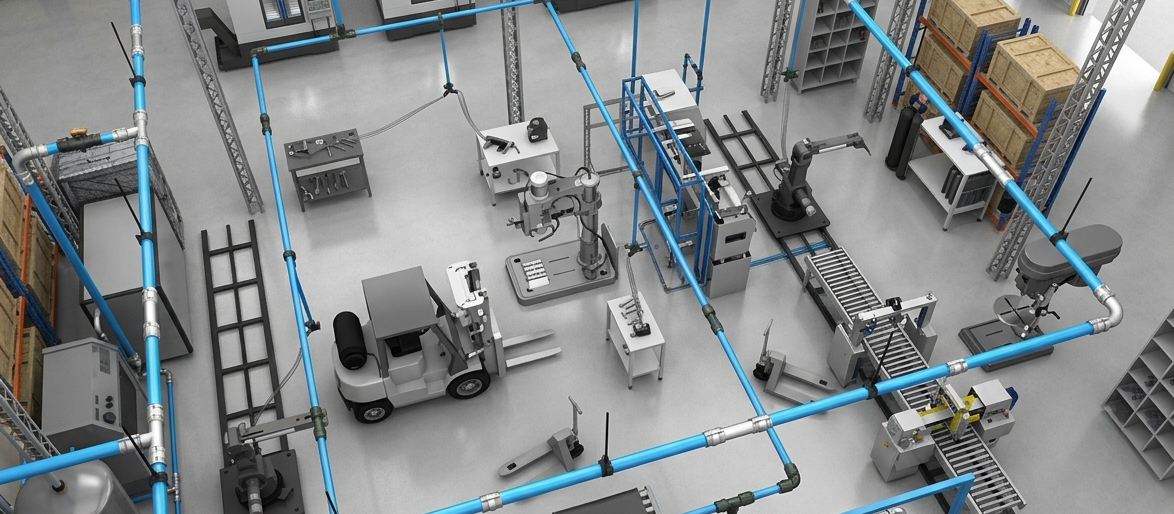
Sizing and installing your compressed air pipework is one of the most critical decisions you will make for your facility. Pipework that is sized too small creates pressure drops, putting extra strain on your compressors and increasing your energy bills.
It’s important to accurately design your compressed air pipework, correcting piping errors after installation is an expensive mistake. On average, 70% of a contracted pipework installation is labour costs, with around 30% spent on materials. Having to make changes after installation, means paying for that labour cost twice.
Here is a breakdown of the 5 common mistakes made when designing compressed air distribution systems, and how to avoid them to ensure your system delivers maximum efficiency from day one.
1. Under-Sizing Pipe Diameters to Save on Initial Material Costs
Choosing a smaller pipe diameter to trim upfront costs is a false economy. As air travels through narrow pipework, friction builds up quickly, causing significant pressure drop before the air ever reaches your equipment.
To compensate for pressure loss at the end of the line, operators often turn up the pressure on the main compressor. Increasing your system pressure by just 1 bar (15 psi) increases your compressor’s electrical power consumption by roughly 7% – potentially adding hundreds or thousands of pounds to your annual energy bills.
2. Ignoring Pressure Drops Across System Components
Air does not travel directly from the air receiver to your pneumatic tools. It passes through a complex network of components, including:
- In-line filtration units and air dryers
- Isolation valves and manifold connections
- Flexible hoses, quick-disconnect fittings, and sharp elbows
Every valve, fitting, and filter introduces mechanical friction. Selecting undersized fittings or restrictive quick-connectors creates sudden “bottlenecks” that starve downstream machinery of air – even if your main header pipes are sized correctly.
3. Failing to Design for Future Expansion
A compressed air system designed strictly for your current needs can quickly become problematic if your business grows. Upgrading production lines or adding new machinery increases total airflow (CFM) demands.
If your system has been sized without head room, adding new air tools will drop operating pressure across your entire factory floor. Designing-in spare flow capacity and incorporating modular drop points ensures your system can adapt without requiring a costly full-system repipe.
4. Selecting the Wrong Piping Material for Your Environment
Not all piping materials perform equally across every industry. Using basic threaded steel pipes in humid environments can lead to internal rust and scale, which flakes off and clogs delicate pneumatic valves. Conversely, using unapproved plastic or PVC piping poses severe safety hazards under high pressure and directly violates UK Pressure Systems Safety Regulations (PSSR 2000).
Modern installations typically utilise smooth-bore aluminum pipework. Aluminum offers lightweight, corrosion-free service with minimal internal friction, making it ideal for general manufacturing, food packaging, and electronics.
5. Poor Layout & Lack of Condensate Management
Dead-end header layouts can suffer from dead zones and uneven pressure delivery across production shifts. A closed-loop (ring main) design allows compressed air to flow in two directions toward any point of high demand, balancing line pressure across the plant.
Additionally, with typical UK winter temperatures dipping below freezing, pipework running through unheated warehouses or external wall runs must incorporate pitch gradients, properly positioned drip legs, and automatic condensate drains to prevent freezing and water damage.
Why Professional Compressed Air Pipework Design Pays Off
A poorly-designed air distribution system leads directly to low productivity, poor tool performance, and inflated energy bills. Using a professional team to manage your design, supply, and installation ensures that every component – from compressor outlet to end-use tool – is matched for optimal flow and safety compliance.
Expert Installation with Cambs Compressors
The engineering team at Cambs Compressors are able to design and install complete compressed air pipework systems in full accordance with the latest British Compressed Air Society (BCAS) best practice guidelines and PSSR 2000 safety regulations.
Our service includes:
- CAD System Schematics: Clear schematic drawings designed around your site’s specific layout and flow demands.
- Material Selection: Guidance on choosing the right steel, aluminum, stainless, or specialised piping materials for your industry.
- Certified On-Site Installation: Fully qualified installation engineers trained to strict health, safety, and quality standards.
Ready to Optimize Your Compressed Air Network?
Whether you are planning a complete pipework installation for a new facility or modifying an existing system across Cambridgeshire and the East of England, our team is here to help.
Contact Cambs Compressors today to discuss your pipework project or request a site survey:
Phone: 0800 0029 601
Email: [email protected]