


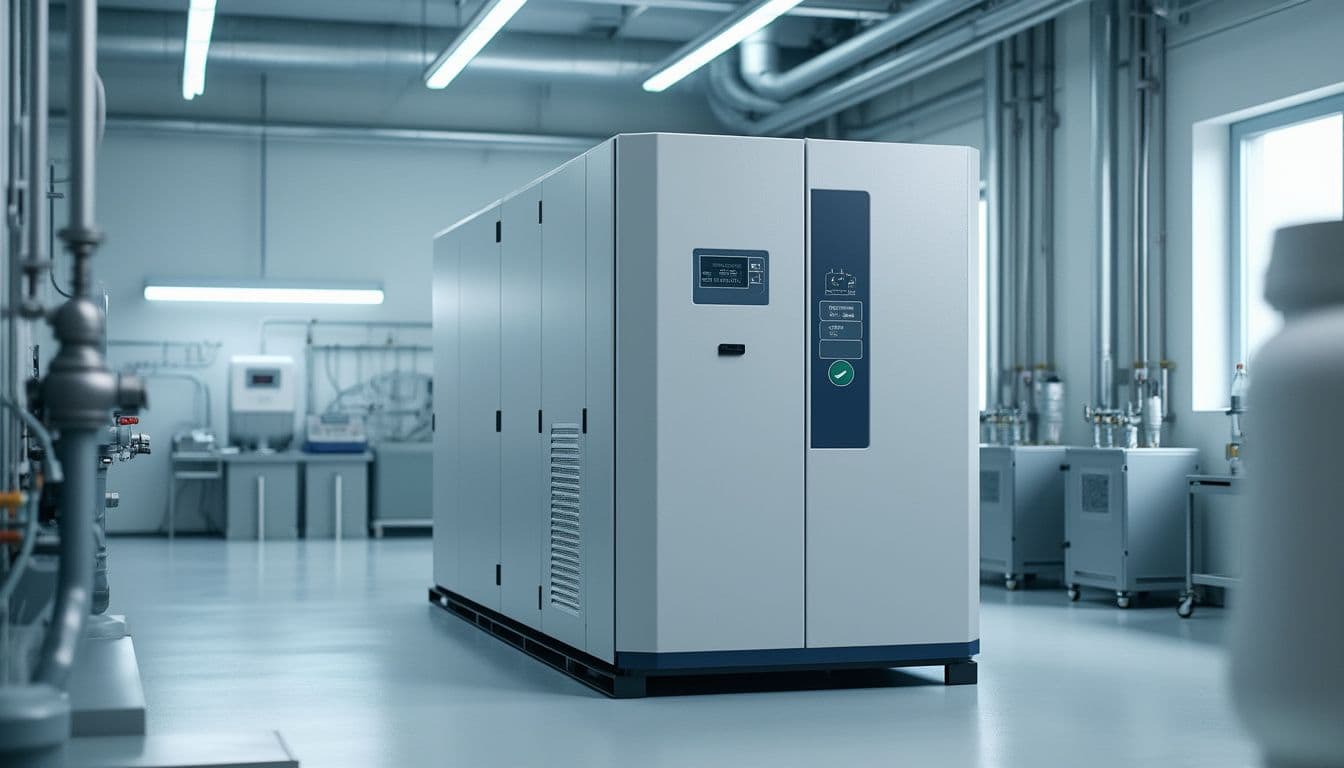
For industrial and manufacturing facilities across Cambridgeshire and the East of England, from life-science research parks in Cambridge to food processing and packaging plants in the Fens, compressed air is often considered the fourth utility. One of the most critical decisions a plant manager or engineer might have to make is whether a standard lubricated air compressor is sufficient, or if the process demands an oil-free compressed air system.
Below is a breakdown of when you need oil-free air, the differences between ISO purity standards, and the potential impact of choosing the wrong equipment. If you want advice on your specific situation get in touch with our knowledge team, who will be happy to advise.
Why Lubricated Air Carries Contamination Risks
Standard oil-injected rotary screw compressors use oil to lubricate, seal, and cool the compression chamber. Even with high-efficiency downstream filtration and oil-water separators, microscopic traces of oil vapor, aerosols, and hydrocarbons can still pass into the air stream.
In heavy engineering or general fabrication, trace oil is rarely an issue. But in sensitive environments, even parts-per-million (ppm) levels of contamination can cause:
- Product Spoilage & Batch Contamination: Ruining entire production runs of food, beverages, or pharmaceuticals.
- Packaging Failures: Compromising food seals, leading to premature spoiling on supermarket shelves.
- Component Damage: Coating delicate electronics, pneumatic sensors, or cleanroom instrumentation in oil residue, causing premature failure.
- Regulatory Penalties: For violating strict UK health, safety, and trading standards.
Understanding the Standards: ISO Class 0 vs. Class 1
When specifying equipment, UK engineers rely on ISO 8573-1, the international standard for compressed air purity. Understanding the difference between the top tiers is vital:
- ISO Class 1: Allows up to 0.01 mg of residual oil aerosol, vapor, and liquid per cubic metre. While suitable for many standard industrial applications, it still permits trace residues.
- ISO Class 0: The strictest standard available. Class 0 requires zero measurable oil content in liquid, aerosol, or vapor form under normal operating conditions.
For industries where purity is non-negotiable, Class 0 is the benchmark specified by auditors and quality assurance bodies.
Who Typically Needs an Oil-Free Air Compressor?
Food and Beverage Processing
Under UK and EU food safety guidelines, any compressed air that comes into direct or indirect contact with food, packaging, or ingredients must be free of contamination. A single oil breach can result in costly product recalls and loss of retailer contracts.
Pharmaceuticals and Life Sciences
Cambridge is a hub for biotechnology, pharmaceuticals, and medical device manufacturing. In cleanrooms and laboratories, air used to pneumatically control valves, package sterile medical tools, or mix chemical components must meet strict ISO Class 0 purity to protect patient safety.
Electronics and High-Tech Manufacturing
Surface-mount technology (SMT) and delicate electronic assembly lines rely on clean pneumatics. Residual oil films can ruin circuit boards, cause solder joint defects, and destroy micro-components.
Beyond food, life sciences, and electronics, ISO Class 0 oil-free air is equally vital across automotive spray painting (where trace oil causes surface defects), plastics and blow moulding, chemical processing, commercial printing, and medical or dental facilities. In any operation where compressed air touches a finished surface, a sterile instrument, or a sensitive chemical mix, eliminating oil at the source is the safest way to guarantee quality.
The Cost of Getting It Wrong
Choosing the wrong compressor type to save on initial capital expenditure is a false economy.
- The Cost of Contamination: A single contaminated batch in a food processing plant or a recalled pharmaceutical run can cost tens of thousands of pounds in wasted stock and reputational damage.
- Retrofitting Costs: Trying to clean up an existing oil-lubricated system by adding multi-stage filtration banks creates heavy pressure drops, increasing your factory’s electricity consumption. There is also the risk that if filtration fails, contamination can still occur.
- Compliance Failures: Failing to meet ISO 8573-1 standards required by your industry regulators can invalidate your operating licences and commercial insurance.
The Solution: Oil-Free Technology
To guarantee compliance, facilities turn to true oil-free compressors. Because no oil is introduced anywhere in the compression chamber, the air delivered is inherently pure, eliminating the risk of downstream oil migration and providing absolute peace of mind for quality managers and auditors.
Depending on your facility’s airflow demand (CFM or l/s), operating pressure, and duty cycle, facilities typically choose between three core oil-free technologies:
- Oil-Free Rotary Screw Compressors: Built for high-demand industrial manufacturing, food processing, and pharmaceutical production. Available in both fixed-speed and Variable Speed Drive (VSD) configurations to match fluctuating plant demand and cut energy bills.
- Oil-Free Scroll Compressors: Ideal for Cambridge biotech labs, dental practices, hospitals, and precision electronics assembly. Air is compressed smoothly between two intermeshing spiral scrolls with minimal moving parts. They operate at exceptionally low noise levels (often under 55 dB(A)), allowing installation right next to the point of use without a separate plant room.
- Oil-Free Piston Compressors: Best suited for smaller workshops, packaging lines, or specialised applications requiring higher operating pressures on an intermittent duty cycle.
The Environmental Benefits of Going Oil-Free
Switching to an oil-free air compressor delivers measurable environmental advantages as well – helping UK manufacturers meet sustainability targets and cut hazardous waste disposal costs:
- Reduced Consumables & Landfill Impact: Eliminating oil filters, separator elements, and filter replacements significantly cuts down on non-recyclable service consumables sent to waste over the machine’s lifespan.
- Elimination of Hazardous Oil Waste: Traditional oil-lubricated compressors require regular oil changes and generate oily condensate (a mix of water and compressor oil). Under UK environmental law, oily condensate cannot be discharged directly into foul sewers and must be treated via oil/water separators or collected by licensed hazardous waste carriers. Oil-free compressors completely remove oil from the compression chamber, eliminating hazardous waste oil disposal and simplifying condensate management.
- Lower Energy Waste from Pressure Drops: Achieving high air purity with an oil-injected compressor requires multiple stages of filtration. Every filter creates a pressure drop, forcing the compressor to work harder and consume more electricity. True oil-free systems deliver clean air directly from the compressor, reducing energy loss and lowering your facility’s carbon footprint.
Expert Guidance with Cambs Compressors
Navigating air purity standards, ISO classifications, and equipment specifications can be complex. Cambs Compressors is here to help – our engineering team is able to conduct thorough air quality audits and specify the ideal compressor technology tailored to your exact industry requirements. Contact us today to discuss the best solution for you:
Phone: 0800 0029601
Email: [email protected]